
PASHA’s latest white paper reveals the skills that will define Pakistan’s tech landscape in the next decade.
Pakistan’s IT sector stands at a decisive inflection point. The rapid acceleration of artificial intelligence, cloud computing, automation, and data-driven systems is fundamentally reshaping how economies create value, how firms hire talent, and how individuals remain employable. PASHA’s white paper, “Future Skills for the IT Industry – Insights and Emerging Technology Imperatives,” is an important intervention in this moment not because it lists new technologies, but because it diagnoses the structural failures in Pakistan’s talent pipeline and argues for systemic reform rather than piecemeal fixes.
At its core, the white paper makes a clear assertion: Pakistan’s skills crisis is not a shortage of graduates, but a mismatch between education, industry needs, and the realities of an AI-driven economy. This mismatch, if left unaddressed, threatens employability, industrial competitiveness, and long-term digital growth
The Real Problem: A Broken Talent Pipeline
The white paper identifies a paradox that has become impossible to ignore. Each year, Pakistan produces a growing number of IT graduates, yet unemployment and underemployment among these graduates continue to rise. This contradiction is not accidental, it is structural.
From early schooling to higher education, learning remains largely rote, theory-heavy, and detached from application. At the K–12 level, memorization dominates classrooms, leaving little room for critical thinking, problem-solving, creativity, or digital fluency. Students arrive at universities without the cognitive foundations required for adaptive learning in fast-changing technological environments.
At the university level, the problem deepens. Curricula are often outdated, designed without meaningful industry consultation, and overly focused on academic theory rather than real-world problem solving. Graduates frequently lack practical exposure to areas that dominate today’s IT job market: cloud computing, full-stack development, AI engineering, DevOps, data analytics, automation, and emerging technologies such as AR/VR.
The result is an employability gap that industry must absorb through costly pre-employment training, while graduates struggle to transition into productive roles.
From Degrees to Skills: A Global Shift Pakistan Cannot Ignore
A key insight of the PASHA white paper is its recognition that global hiring practices are moving away from degree-centric models toward skills-based and competency-driven recruitment. Employers increasingly value demonstrable capabilities, hybrid skill sets, and the ability to work alongside AI systems, not just formal qualifications.
In this context, the paper emphasizes continuous learning as a core professional requirement. The ability to learn, unlearn, and relearn is positioned not as an advantage, but as a necessity. Static education models are no longer sufficient in a world where tools, platforms, and workflows evolve faster than academic curricula.
To respond to this shift, the white paper strongly advocates for modular certifications, micro-credentials, and industry-recognized learning pathways particularly in cloud platforms, AI fundamentals, data analytics, and automation technologies. These are framed not as supplements to degrees, but as essential components of employability and global credibility.
Industry–Academia Misalignment: The Costliest Disconnect
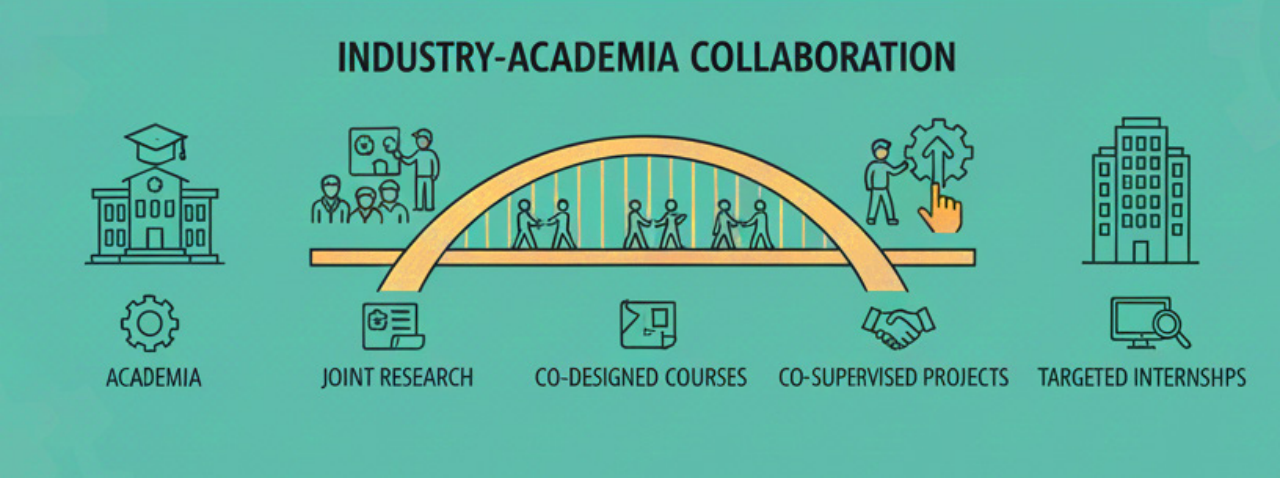
Source: https://www.pasha.org.pk/wp-content/uploads/WHITEPAPER-DRAFT-Future-Skills-Revised.pdf
One of the most critical sections of the white paper focuses on the persistent disconnect between industry and academia. Universities often design programs in isolation, while industry struggles to find job-ready talent. This separation undermines innovation, slows technology adoption, and weakens Pakistan’s position in global IT value chains.
PASHA argues that bridging this gap requires more than guest lectures or internships; it demands structural collaboration. Curricula must be co-designed with industry, Final Year Projects must solve real business problems, and students must be trained on tools and platforms actively used in the market, including AI development frameworks, cloud services, automation tools, and collaborative coding environments.
Institutionalized Industry Academia Advisory Boards are proposed as a mechanism to ensure continuous alignment, allowing curricula to evolve alongside technological and market changes rather than lag behind them.
Faculty Development: The Missing Lever in Skills Reform
Source: https://www.pasha.org.pk/wp-content/uploads/WHITEPAPER-DRAFT-Future-Skills-Revised.pdf
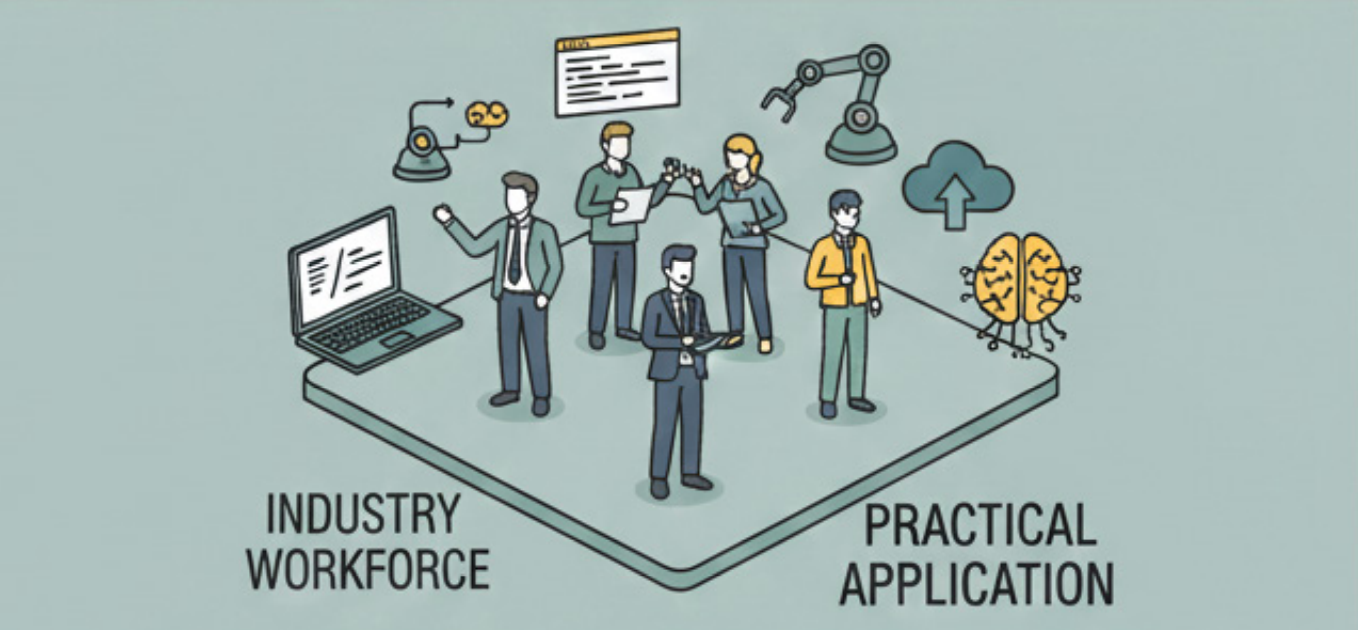
A particularly important and often under-discussed issue raised in the white paper is faculty readiness. Current higher education policies prioritize academic credentials, such as PhDs, while undervaluing industry experience. This has produced a faculty body that is often strong in theory but disconnected from applied technologies and modern development practices.
PASHA identifies this as a major bottleneck. Without industry-exposed educators, even well-designed curricula cannot translate into practical learning. To address this, the paper proposes structured faculty immersion programs, short-term industry placements, AI-focused educator certifications, and joint research fellowships with technology firms.
The underlying message is direct: future-ready students cannot be produced by past-oriented teaching models.
AI as a Societal Capability, Not Just a Technical Skill
Unlike many skills reports that confine AI to the IT sector, PASHA’s white paper frames AI as a horizontal, society-wide capability. It argues that Pakistan’s digital future depends on normalizing AI as a human-assistive tool across education, work, and governance.
To achieve this, the paper calls for a National AI Literacy Framework supported by public awareness campaigns, media engagement, and sector-specific use cases in healthcare, agriculture, and public services. Building trust in AI through exposure, transparency, and ethical use is presented as essential for widespread adoption and productivity gains.
This framing positions AI not as a threat to jobs, but as a catalyst for higher-value work, innovation, and inclusive growth.
Infrastructure: The Silent Enabler of Skills
The white paper is clear that skills reform cannot succeed without addressing Pakistan’s digital infrastructure gaps. Limited access to reliable internet, electricity, devices, and cloud resources continues to exclude large segments of the population from digital learning and remote work opportunities.
Closing the digital divide through broadband expansion, affordable devices, community learning hubs, and inclusive access for women and underserved regions is presented as a prerequisite for any meaningful skills strategy. Without this foundation, even the best-designed training programs risk benefiting only a narrow segment of society.
A Strategic Direction, Not a Final Blueprint
PASHA’s white paper does not pretend to offer a complete implementation roadmap. Instead, its value lies in clarifying the direction of travel. It identifies where Pakistan’s skills ecosystem is failing, what global best practices suggest, and which levers education reform, industry collaboration, faculty development, continuous learning, AI literacy, and infrastructure must move together.
The challenge now is execution. Translating these insights into policy action, funded programs, institutional reforms, and scalable pilots will require coordinated effort from government, industry, academia, and ecosystem builders.
If acted upon seriously, the ideas outlined in this white paper can help Pakistan shift from producing degrees to producing capable, adaptive, and globally competitive digital talent, a transformation that is no longer optional, but essential for the country’s economic future.