
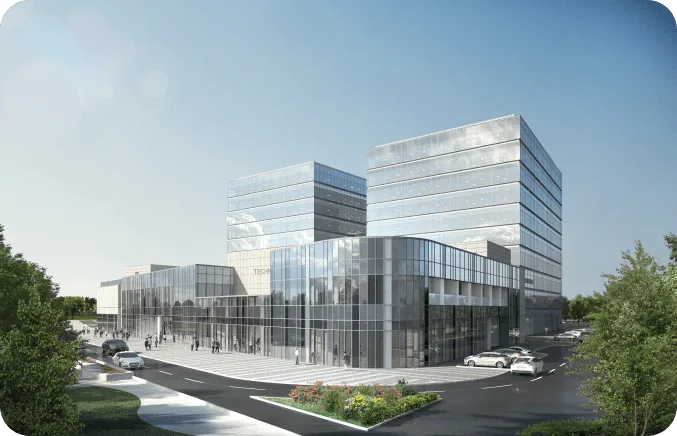
Beyond the Deadline: Islamabad IT Park and the Test for Pakistan’s STZA Vision
After years of anticipation, delays, and revised timelines, the Islamabad IT Park is finally nearing physical completion, with 98% of its structure now in place. A new operational deadline has been announced, once again reviving expectations around what is meant to be Pakistan’s flagship technology infrastructure project and a cornerstone of the country’s Special Technology Zones Authority (STZA) vision.
But as the project moves closer to launch, the more important question is no longer when the building opens it is what it will actually deliver once it does.
A Long-Awaited Asset and a High-Stakes One
On paper, the Islamabad IT Park checks all the right boxes. Envisioned as a state-of-the-art hub for technology companies, startups, research institutions, and multinational firms, it is designed to provide purpose-built infrastructure aligned with international standards. Reliable power, modern facilities, and a centralized location were always meant to make it easier for tech companies to scale and serve global markets.
Yet the project’s long gestation has also raised expectations. After years of construction delays and administrative bottlenecks, a completed structure alone will no longer be enough to count as success. As focus shifts from civil works to operational readiness, the IT Park enters the phase where policy intent must translate into real economic outcomes.
From Construction to Execution
With structural work largely complete, the remaining tasks of IT and telecom infrastructure, power and cooling systems, security frameworks, and tenant allocation are not just technical milestones. They will determine who gets access, how quickly companies can move in, and whether the park functions as a cohesive ecosystem or merely premium office space.
The government has positioned the IT Park as a catalyst for clustering hundreds of companies and thousands of professionals in one location. If done right, this concentration can unlock productivity gains, collaboration, and export growth. If done poorly, it risks becoming another underutilized public asset.
Why This Matters Now
The timing is critical. Pakistan’s IT and IT-enabled services sector has remained one of the country’s most resilient export segments, even as other parts of the economy have struggled. Global demand for software, remote services, and digital solutions continues to grow but competition for that demand is intense.
A functional IT Park can:
- Enable export-oriented firms to scale faster
- Attract foreign technology companies seeking regional delivery hubs
- Support high-value employment for skilled youth
- Reinforce Pakistan’s credibility as a serious digital economy
However, these outcomes are not automatic. Infrastructure enables growth, but it does not guarantee it.
Who the IT Park Is Really For
Despite common assumptions, the Islamabad IT Park is not an incubator. It is a commercial, rent-based facility best suited for revenue-stage startups, scaleups, software houses, and multinational firms, rather than idea-stage founders.
For startups graduating from incubators and accelerators, the park could offer a logical next step: professional space, proximity to peers, and improved signaling to international clients. For global firms, it offers a plug-and-play entry point into Pakistan assuming regulatory clarity, operational efficiency, and service quality are consistently maintained.
Cautious Optimism for Good Reason
The ecosystem’s response to the 98% completion milestone has been cautiously optimistic. Previous delays have made stakeholders wary of celebrating too early. The real risk now lies not in construction, but in governance, tenant mix, and activation strategy.
Will space be allocated strategically to export-driven and innovation-focused firms?
Will collaboration between companies, academia, and ecosystem enablers be encouraged or left to chance?
Will the IT Park function as an STZA in spirit, or only in name?
More Than a Building
At this stage, the Islamabad IT Park is no longer just a construction project, it is a litmus test for Pakistan’s broader STZA vision. If managed well, it can become a genuine home for the country’s next tech workforce and a driver of sustained digital exports. If not, it risks reinforcing a familiar pattern: impressive infrastructure with limited downstream impact.
As the deadline approaches, expectations must shift decisively from steel and square footage to strategy and outcomes.
What This Means for Startups
For startups, the Islamabad IT Park represents a shift in how growth-stage companies are expected to operate within Pakistan’s ecosystem. This is not a space for experimentation or ideation, but for execution. Startups that have moved beyond incubation with paying customers, export contracts, or enterprise pilots could find the IT Park to be a credible base for scaling teams and servicing international clients. Being housed alongside established software firms and multinationals also creates opportunities for enterprise partnerships, talent cross-pollination, and acquisition pathways that rarely emerge in isolated offices. However, affordability, flexible lease structures, and transparent entry criteria will be decisive. If access is limited to only large players, the park risks excluding precisely the scale-stage startups that drive innovation and future exports.